What Are Microneedling Boosters and Do They Make a Difference?
- Skin 101
- November 15, 2026
- 9 min read
microneedling
Table of Contents
- 1. What Are Microneedling Boosters?
- 2. How Are Boosters Used With Microneedling?
- 3. What Types of Microneedling Boosters Are Available?
- 4. Do Microneedling Boosters Actually Make a Difference?
- 5. Which Microneedling Booster Is Right for Your Skin?
- 6. Microneedling Boosters vs. RF Microneedling
- 7. What Should You Know About Safety and Recovery?
- 8. Frequently Asked Questions
- 10. Bottom Line
Microneedling is widely used to improve skin texture, soften the appearance of acne scars, and support collagen production. But if you have been exploring treatment options, you may have noticed that some providers also offer additional serums and specialized ingredients called microneedling boosters.
Advanced skin microneedling may include these boosters as part of a personalized approach to skin rejuvenation. Depending on the formulation, they may be intended to address concerns such as dryness, dullness, uneven texture, or visible signs of aging. But does adding a booster actually improve your results, or is traditional microneedling enough?
The answer depends on your skin concerns, the ingredients being considered, and the available clinical evidence. Here’s what you should know about microneedling boosters, how they differ, and whether they may be worth discussing with your provider.
1. What Are Microneedling Boosters?
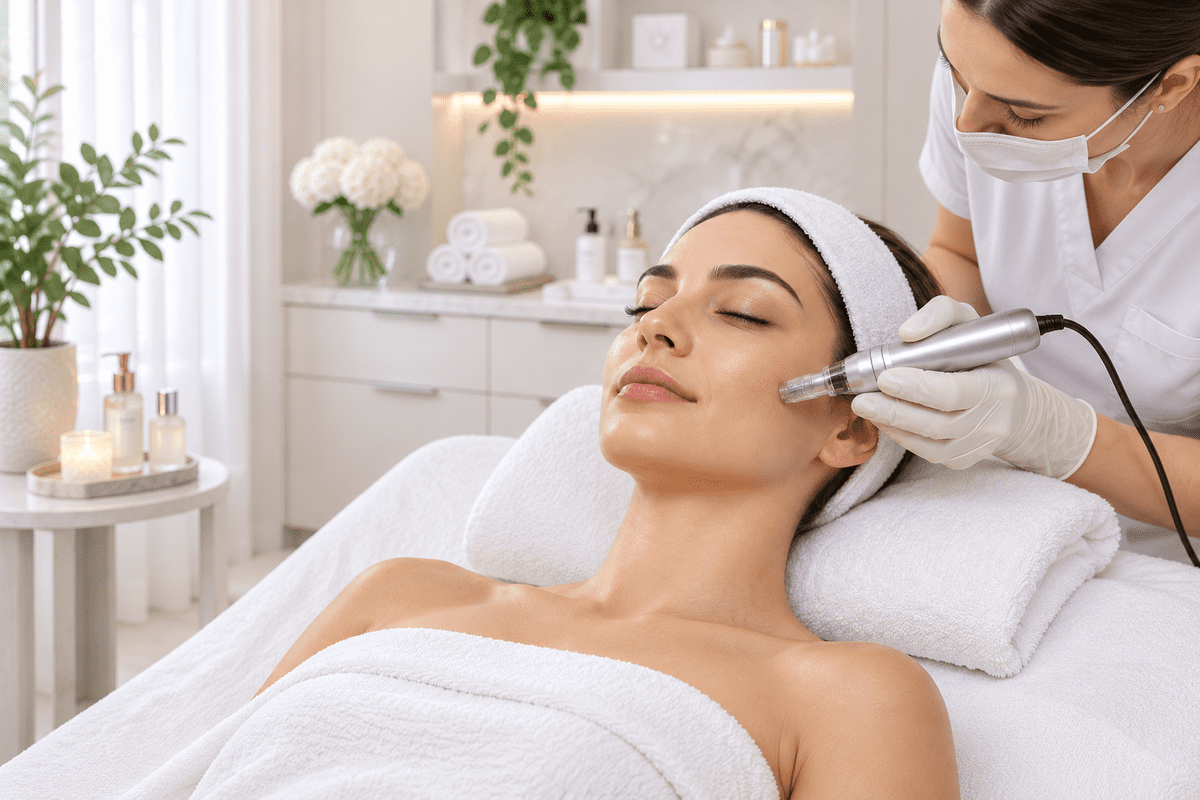
Microneedling boosters are specialized skincare formulations that may be used alongside a professional microneedling procedure. Traditional microneedling uses fine needles to create controlled microscopic injuries in the skin, activating a natural repair response that can encourage collagen remodeling and improve certain skin concerns over time.
Boosters introduce an additional component to the treatment. Depending on the product, they may contain hydrating ingredients, polynucleotides, or growth factors.
Common goals associated with boosters include:
Improving the appearance of dry or dull skin
Supporting a smoother-looking complexion
Addressing uneven skin texture
Supporting skin hydration
Complementing a collagen-stimulating treatment
However, not all boosters have the same ingredients, supporting research, or intended uses. Advanced skin microneedling should therefore involve more than selecting a product based on its name or popularity. The formulation, individual skin concerns, and safety of the proposed combination all need to be considered.
For more information about the procedure itself, read our article on what microneedling is and how it works.
2. How Does Advanced Skin Microneedling Use Boosters?
The primary effect of microneedling comes from the body’s response to controlled micro-injuries. These injuries initiate healing processes involving inflammation, tissue repair, and collagen remodeling. Over time, some patients notice gradual improvements in texture, firmness, or the appearance of certain scars.
You can learn more about this biological response in our article on microneedling collagen production.
Boosters are intended to complement the procedure rather than replace its primary mechanism. Depending on the formulation and treatment protocol, a provider may consider ingredients associated with hydration, skin conditioning, or tissue-repair processes.
However, creating microchannels does not automatically mean every topical product is safe to apply or will provide additional benefits. It is important to distinguish between an ingredient’s theoretical benefits and evidence that a particular product improves outcomes when combined with microneedling.
3. What Types of Microneedling Boosters Are Available?
Skin 101 Houston describes several booster options on its microneedling service page. Each has a different intended focus, and understanding these differences can help you ask more informed questions during a consultation.
Hyaluronic Acid (HA) Booster
Hyaluronic acid is a substance naturally found in the body that helps tissues retain moisture. In skincare, it is commonly used to support hydration and temporarily improve the appearance of dry or dehydrated skin.
An HA booster may be considered when concerns include:
Dry or dehydrated-looking skin
Dull complexion
Skin that appears less plump
Roughness associated with dryness
Hyaluronic acid is a familiar ingredient in moisturizers and serums. However, evidence supporting ordinary topical skincare use should not be confused with evidence supporting its application during microneedling.
PDRN Tone Up Booster
PDRN stands for polydeoxyribonucleotide, a DNA-derived compound being studied for its potential role in tissue repair and skin rejuvenation. Skin 101 describes its PDRN Tone Up option as a booster intended to support a brighter-looking complexion and improve the appearance of uneven tone.
It may be discussed for concerns such as:
Dull-looking skin
Uneven appearance of skin tone
Visible signs of tired-looking skin
General complexion refinement
Although PDRN has attracted interest in aesthetic medicine, research varies considerably by formulation, concentration, and method of administration. This means findings from one PDRN product cannot automatically be applied to another.
Rejuran Healing Essence
Rejuran Healing Essence is another booster listed by Skin 101 Houston. The clinic describes it as an option focused on skin recovery, texture, and overall skin quality.
Its intended cosmetic goals include:
Improving the appearance of rough skin
Supporting a smoother-looking surface
Addressing early signs of aging
Supporting the appearance of skin elasticity
Rejuran products are not necessarily interchangeable, as different formulations may have different ingredients, applications, and supporting evidence. Patients should ask exactly which formulation is being used and what evidence supports the proposed treatment.
PDGF Booster
PDGF stands for platelet-derived growth factor. Growth factors are signaling proteins involved in normal biological processes, including tissue repair. Skin 101 describes its PDGF booster as an option intended to support skin rejuvenation and address texture and firmness concerns.
Potential treatment goals may include:
Improving the appearance of fine lines
Addressing uneven skin texture
Supporting a firmer-looking complexion
General skin rejuvenation
However, the involvement of PDGF in normal wound healing does not establish that applying a particular PDGF product during microneedling produces superior clinical results.
Advanced skin microneedling may include different booster formulations, but their intended purposes and evidence vary. No single booster should be considered universally better for every skin type.
4. Do Microneedling Boosters Actually Make a Difference?
Microneedling can produce cosmetic improvements without boosters because its primary benefits come from the skin’s response to the procedure itself. The question is whether adding a specific formulation produces a meaningful improvement beyond microneedling alone.
According to a systematic review of randomized clinical trials available through the National Library of Medicine’s PubMed Central, polynucleotide and PDRN-based treatments have shown promising results in some skin rejuvenation and wound-healing studies. However, the review included relatively small studies using different formulations and treatment methods. The researchers emphasized the need for larger studies and standardized protocols.
These findings are encouraging, but they do not establish that every commercially available booster improves microneedling results.
When evaluating advanced skin microneedling, consider three important questions:
Is there research on the specific ingredient? General evidence about an ingredient may not apply to every product.
Was the product studied with microneedling? Results from injections or other treatments cannot automatically be applied to topical use.
Were the benefits clinically meaningful? A small improvement in a study may not produce a noticeable difference for every patient.
Some booster combinations may offer additional benefits, but the evidence remains limited and product-specific. A higher treatment price does not necessarily indicate greater effectiveness.
5. Which Microneedling Booster Is Right for Your Skin?
Choosing a booster starts with identifying the skin concern you want to address. A person primarily bothered by dryness may have different priorities from someone concerned about acne scars or fine lines. The intended purpose of each booster can help guide a conversation with your provider.
| Skin Concern | Booster Worth Discussing |
|---|---|
| Dryness and dehydration | Hyaluronic acid |
| Dull or uneven-looking tone | PDRN Tone Up |
| Rough texture and skin quality | Rejuran Healing Essence |
| Fine lines and firmness concerns | PDGF |
These are the intended cosmetic applications described by the clinic, not guarantees of improved outcomes.
Before considering advanced skin microneedling, a provider should assess your skin condition, medical history, treatment goals, and the suitability of any proposed booster. You may not need an additional product at all.
For example, traditional microneedling alone may be appropriate for some texture concerns. In other cases, another skincare treatment could be better suited to the underlying problem. The goal should be choosing a treatment that makes sense for your skin rather than adding ingredients unnecessarily.
6. Microneedling Boosters vs. RF Microneedling: What Is the Difference?
Microneedling boosters and radiofrequency microneedling are not the same treatment approach. Traditional microneedling uses fine needles to stimulate the skin’s natural repair response, while boosters involve additional formulations that may be incorporated into a treatment plan. RF microneedling combines needles with radiofrequency energy, which delivers controlled heat beneath the skin’s surface.
The main differences include:
Traditional microneedling: Relies on controlled needle-induced micro-injuries.
Microneedling with boosters: Combines the procedure with an additional skincare formulation.
RF microneedling: Uses needles and radiofrequency energy to target tissue at selected depths.
Advanced skin microneedling does not necessarily involve radiofrequency energy. The term may also describe customized microneedling protocols using additional products.
Some patients may be better suited to RF microneedling, particularly when concerns include skin laxity or certain textural changes. However, RF microneedling has its own risks, and it is not automatically the better option. Your provider should explain the benefits and limitations of each approach before recommending treatment.
7. What Should You Know About Safety and Recovery?
Microneedling creates controlled injuries in the skin, so appropriate technique and aftercare are essential. Adding a booster does not eliminate the usual risks of microneedling.
According to the U.S. Food and Drug Administration’s guidance on microneedling devices, the agency has not cleared microneedling devices for use with additional topical products, drugs, or cosmetics. This means the FDA has not evaluated the safety and effectiveness of those combined uses through its device-clearance process. It does not mean every combination necessarily causes harm, but it is an important limitation patients should understand.
Potential side effects of microneedling include:
Temporary redness and sensitivity
Mild swelling or discomfort
Dryness and peeling
Skin irritation
Changes in pigmentation
Infection or other complications
Advanced skin microneedling requires careful consideration of both the procedure and any additional products being used.
Before treatment, ask your provider:
What ingredients are in the proposed booster?
Is the formulation appropriate for use with microneedling?
What evidence supports its use?
Are there additional risks or allergy concerns?
How will aftercare differ from standard microneedling?
What to Expect After Treatment
Some patients experience redness, warmth, or tightness after microneedling. These effects often improve over the following days, although recovery varies. Following the aftercare instructions provided by your treating professional can help support proper healing.
General recommendations may include:
Using gentle skincare products as instructed
Avoiding harsh exfoliants and retinoids until cleared
Protecting recovering skin from excessive sun exposure
Avoiding unnecessary touching or picking
Reporting unusual or worsening symptoms to your provider
A booster should not be assumed to shorten healing time or prevent complications.
8. Frequently Asked Questions
Are Microneedling Boosters Necessary?
No. Microneedling can provide cosmetic improvements without additional boosters. A booster may be considered for a specific skin concern, but there is no requirement that every treatment include one. Its potential value depends on the formulation, evidence, and individual treatment goals.
Does Advanced Skin Microneedling Work Better Than Regular Microneedling?
Not necessarily. Some combination treatments have shown promising results in limited studies, but those findings do not establish that every booster improves outcomes. Traditional microneedling alone may be appropriate for many patients.
Can Microneedling Boosters Help With Acne Scars?
Some patients receive microneedling for acne scar concerns because the procedure can support collagen remodeling. However, evidence that a particular booster adds meaningful scar improvement is limited. Scar type, depth, and individual response influence results.
Is PDRN Better Than Hyaluronic Acid for Microneedling?
There is not enough high-quality comparative evidence to conclude that one is universally better. Hyaluronic acid is commonly associated with hydration, while PDRN is being studied for tissue-repair and skin-rejuvenation applications. The appropriate option depends on the specific product and treatment goals.
How Long Do Microneedling Booster Results Last?
Results vary depending on the procedure, ingredients, skin condition, and individual response. Some hydration-related changes may be temporary, while collagen-related improvements from microneedling can develop gradually. There is no established duration that applies to every booster.
9. Bottom Line
Microneedling boosters introduce an additional skincare component to a procedure already designed to stimulate the skin’s natural repair response. Options such as hyaluronic acid, PDRN, Rejuran Healing Essence, and PDGF have different intended cosmetic uses. However, their presence in a treatment does not automatically guarantee better results.
Advanced skin microneedling may be worth discussing if you have specific concerns about hydration, texture, or signs of aging. The key is understanding which ingredients are being proposed, what research supports them, and whether the combination is appropriate for your skin. Traditional microneedling may still be sufficient for many patients.
If you are considering professional treatment, learn more about microneedling in Houston, TX and the options available at Skin 101.
Key Takeaways
Microneedling boosters are additional formulations that may be used alongside professional microneedling.
Skin 101 offers hyaluronic acid, PDRN Tone Up, Rejuran Healing Essence, and PDGF booster options.
Each booster has different intended cosmetic goals.
Clinical evidence supporting combination treatments is still developing.
The FDA has not cleared microneedling devices for use with additional topical products.
Boosters are not necessary for every patient.
A qualified provider should assess the risks and potential benefits before recommending a combination.
EXPLORE A MORE PERSONALIZED APPROACH TO SKIN RENEWAL
Not every skin concern requires the same treatment. Understanding your skin type, goals, and available options can help you make a more informed decision.
At Skin 101 Houston, a consultation can help you explore advanced skin microneedling, learn about available boosters, and determine whether traditional microneedling or another treatment may be more appropriate.
Disclaimer: This article is for educational purposes only and is not a substitute for professional medical advice. Microneedling and combination treatments involve risks. Individual outcomes vary, and additional products should be considered only after appropriate professional assessment.