What Causes Rolling Acne Scars and How Are They Treated?
- Skin 101
- November 22, 2026
- 8 min read
ACNE SCAR TREATMENT
Table of Contents
- 1. What Do Rolling Acne Scars Look Like?
- 2. What Causes Rolling Acne Scars to Form?
- 3. Which Rolling Acne Scar Treatment Options May Help?
- 4. Can Microneedling Improve Rolling Acne Scars?
- 5. How Many Treatments Are Needed to See Improvement?
- 6. What Should You Expect Before and After Treatment?
- 7. How Can You Prevent Additional Acne Scarring?
- 8. Frequently Asked Questions
- 9. Bottom Line
Acne may disappear after a few weeks, but the scars it leaves behind can remain for years. If your cheeks have broad, shallow indentations that create an uneven or wavy appearance, you may be dealing with rolling acne scars. Unlike small, sharply defined acne scars, rolling scars can affect larger areas of skin and become especially noticeable under certain lighting.
Rolling acne scar treatment focuses on improving these depressions by addressing collagen loss, scar tissue beneath the skin, or both. Depending on the severity of the scarring, treatment may involve microneedling, radiofrequency microneedling, subcision, or other professional procedures.
Understanding what causes rolling acne scars is the first step toward choosing an appropriate treatment. Here’s how these scars develop, which approaches may help, and what results you can realistically expect.
1. What Do Rolling Acne Scars Look Like?
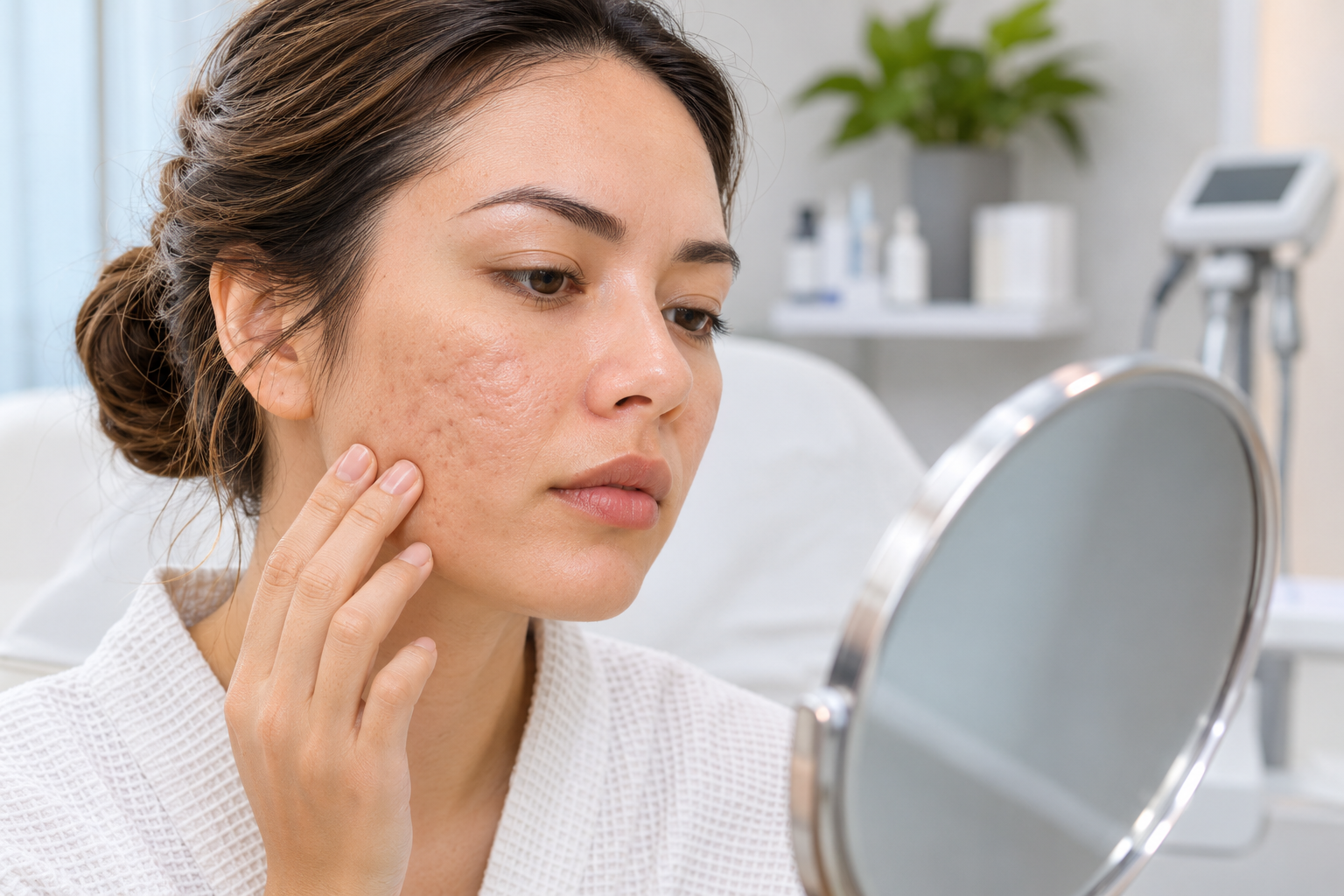
Rolling acne scars are a type of atrophic scar, meaning they develop when the skin loses supporting tissue during the healing process. They typically appear as broad, shallow depressions with gently sloping edges, creating a wave-like appearance across the skin. They commonly develop on the cheeks, where previous inflammatory acne may have affected deeper layers of tissue.
Unlike other acne scars, rolling scars usually do not have sharply defined borders. Their appearance can also change depending on facial expressions, lighting, and skin tension. Rolling acne scar treatment requires identifying these structural changes rather than treating every indentation as the same type of scar.
Common characteristics include:
Broad, shallow depressions
Gently sloping or uneven edges
A wavy appearance across the cheeks
Indentations that become more noticeable under angled lighting
Areas where the skin appears pulled downward
Rolling scars differ from ice-pick scars, which are deeper and narrower, and boxcar scars, which have more defined edges. Our article on ice-pick scars and their treatment explains how another common scar type develops and why different scar shapes require different approaches.
2. What Causes Rolling Acne Scars to Form?
Rolling acne scars develop when inflammatory acne damages the skin’s deeper supporting structures. During healing, collagen may be lost or reorganized unevenly, leaving areas that sit lower than the surrounding skin. In some cases, fibrous scar tissue forms beneath the surface and pulls the skin downward, producing the characteristic rolling appearance.
These fibrous attachments are often called scar tethers. They connect the skin to deeper tissue and can prevent an indentation from rising naturally. This explains why creams and surface exfoliation generally cannot fully correct rolling scars. Effective rolling acne scar treatment may need to address both collagen loss and the underlying attachments that hold the skin down.
Several factors can contribute to the development of rolling scars:
Severe or prolonged inflammatory acne
Deep acne lesions, including nodules and cysts
Delayed treatment of persistent acne
Repeated squeezing or picking of inflamed lesions
Individual differences in skin healing and collagen production
Not everyone with severe acne develops significant scarring. Genetics, the depth of inflammation, and individual healing responses can all influence how scars form.
3. Which Rolling Acne Scar Treatment Options May Help?
The most appropriate treatment depends on scar depth, tissue tethering, skin tone, and individual goals. Some people have relatively shallow rolling scars that may improve with collagen-stimulating procedures, while others have deeper attachments that require more targeted intervention.
According to a comprehensive review of atrophic acne scar treatments published through the National Library of Medicine’s PubMed Central, rolling scars are associated with fibrous attachments beneath the skin, and subcision is specifically designed to release those attachments. The review also discusses microneedling, fillers, and combination treatments as approaches that may improve scar appearance.
Common rolling acne scar treatment options include:
Microneedling: Creates controlled micro-injuries that stimulate collagen remodeling and may improve shallow depressions and uneven texture.
RF Microneedling: Combines microneedling with radiofrequency energy to support collagen remodeling and improve certain acne scars.
Subcision: A procedure performed by an appropriately trained medical professional to release fibrous bands holding scars down.
Dermal Fillers: May temporarily elevate selected depressed scars by adding volume beneath the skin.
Laser Resurfacing: May improve uneven texture and support skin remodeling, depending on the type of laser and treatment plan.
Not every provider offers all these procedures, and no single treatment works equally well for every scar. Patients with significant tethering may need evaluation by a dermatologist experienced in scar-release techniques. Skin 101 offers collagen-stimulating treatments, including microneedling and RF microneedling, that may be considered for appropriate acne scar concerns.
4. Can Microneedling Improve Rolling Acne Scars?
Microneedling is commonly used to improve the appearance of atrophic acne scars by stimulating the skin’s natural repair process. During treatment, fine needles create controlled micro-injuries that encourage collagen remodeling. As the skin heals, some shallow depressions may become less noticeable, improving overall texture.
For people considering rolling acne scar treatment, microneedling may be appropriate when collagen loss and surface irregularities are important contributors to the scarring. However, microneedling does not mechanically release the fibrous attachments responsible for deeply tethered rolling scars. This means some patients may benefit from a combination of procedures rather than microneedling alone.
A professional assessment can help determine which approach may be suitable. Skin 101 offers microneedling treatments designed to address uneven texture and the appearance of acne scars. You can also read our article on whether microneedling actually works on acne scars to understand the available research and realistic treatment expectations.
5. How Many Treatments Are Needed to See Improvement?
Rolling acne scars usually require gradual improvement rather than an immediate transformation. Treatments that rely on collagen remodeling often involve multiple sessions because new collagen develops over time. The number of visits depends on scar severity, treatment type, healing response, and whether additional procedures are needed.
For rolling acne scar treatment involving microneedling, sessions are commonly spaced several weeks apart to allow the skin to recover. Some patients begin noticing textural changes after a few appointments, while deeper scars may require a longer treatment plan. A provider should recommend the schedule based on your individual skin rather than promising the same timeline for everyone.
Several factors may influence results:
Depth and extent of the scarring
Presence of fibrous attachments beneath the skin
Type of treatment selected
Individual collagen response
Skin health and aftercare practices
Even when treatment is effective, complete scar removal is not guaranteed. The goal is generally to soften visible depressions and improve skin texture, making scars less noticeable over time.
6. What Should You Expect Before and After Treatment?
Before beginning rolling acne scar treatment, a qualified provider should examine your skin to identify the type and depth of your scars. This assessment may also include questions about active acne, previous procedures, medications, skin sensitivity, and your history of pigmentation changes. Addressing ongoing inflammatory acne is often important before beginning scar-focused procedures.
According to the U.S. Food and Drug Administration’s guidance on microneedling devices, certain microneedling devices have been authorized to improve the appearance of facial acne scars in adults aged 22 and older. However, the procedure carries potential risks, including redness, irritation, infection, and changes in pigmentation. The FDA recommends discussing benefits and risks with a properly trained healthcare provider.
If microneedling is recommended, your provider may give instructions such as:
Avoid irritating exfoliants and certain active skincare products before treatment, as directed.
Inform your provider about recent acne medications, cosmetic procedures, and skin reactions.
Keep the treatment area clean and follow individualized aftercare instructions.
Avoid picking or scratching treated skin during recovery.
Protect your skin from excessive sun exposure.
Contact your provider if you develop worsening redness, unusual pain, or signs of infection.
Recovery varies by procedure. Microneedling commonly causes temporary redness and sensitivity, while more invasive scar treatments may involve additional bruising, swelling, or downtime.
7. How Can You Prevent Additional Acne Scarring?
Although existing rolling scars generally cannot be erased with skincare products, treating active acne may help reduce the risk of new scars developing. Repeated inflammation can damage collagen and increase the likelihood of permanent skin changes, particularly when acne involves deep nodules or cysts.
A consistent skincare routine, appropriate acne treatment, and avoiding unnecessary skin trauma can help protect your skin. If you experience frequent inflammatory breakouts, early evaluation by a qualified healthcare professional may reduce the risk of further damage. Daily sun protection is also important because ultraviolet exposure can worsen post-inflammatory discoloration, even though it does not directly reverse indented scars.
Preventing new scars is an important part of any long-term rolling acne scar treatment plan. If you are still experiencing active breakouts, a provider may recommend managing acne first before moving forward with procedures designed to improve existing scarring.
8. Frequently Asked Questions
Can Rolling Acne Scars Go Away on Their Own?
Rolling acne scars are structural changes in the skin and generally do not disappear completely without treatment. Although their appearance may change over time, established depressions often remain visible because collagen loss and fibrous attachments do not necessarily resolve naturally.
Is Microneedling or Subcision Better for Rolling Acne Scars?
The better option depends on the scar’s structure. Microneedling may improve shallow rolling scars by stimulating collagen remodeling, while subcision directly targets the fibrous bands responsible for tethered depressions. Some patients benefit from both procedures, although a qualified professional must determine whether this is appropriate.
Can RF Microneedling Help With Rolling Acne Scars?
RF microneedling may improve certain rolling acne scars by encouraging collagen remodeling within the skin. It may be considered when uneven texture or other concerns are present, but it does not replace the mechanical release of deeply tethered scars.
Skin 101 offers RF microneedling for appropriate skin concerns, including acne scar appearance.
Is Rolling Acne Scar Treatment Permanent?
Some improvements from structural scar treatments may be long-lasting, but results vary depending on the procedure and individual healing. Fillers may require maintenance, and scar tethering can sometimes recur after subcision. No treatment guarantees permanent or complete scar removal.
Are Rolling Acne Scars Harder to Treat Than Ice-Pick Scars?
Not necessarily. Rolling and ice-pick scars have different structural features, which affect treatment selection. Rolling scars may respond to collagen-stimulating procedures or subcision, while deeper ice-pick scars often require more targeted approaches. The overall difficulty depends on scar depth, severity, and individual skin characteristics.
9. Bottom Line
Rolling acne scars develop when inflammatory acne damages supporting tissue and, in some cases, creates fibrous attachments that pull the skin downward. Their broad, sloping shape distinguishes them from other types of atrophic acne scars and influences which treatments may provide meaningful improvement.
Rolling acne scar treatment may include microneedling, RF microneedling, subcision, fillers, or laser-based procedures, depending on the scar’s structure. While collagen-stimulating treatments may improve skin texture, deeply tethered scars sometimes require more specialized intervention. The most effective approach begins with identifying the scar type and setting realistic expectations.
If you are exploring professional care, learn more about acne scar treatment in Houston and the treatment options available at Skin 101.
Key Takeaways
Rolling acne scars create broad, shallow indentations with a wavy appearance.
They develop from collagen loss and fibrous attachments following inflammatory acne.
Microneedling may improve shallow rolling scars by encouraging collagen remodeling.
Deeply tethered scars may require subcision or other specialized procedures.
RF microneedling may help improve texture in appropriately selected patients.
Treatment results vary, and multiple sessions may be necessary.
Controlling active acne can help reduce the risk of additional scarring.
UNDERSTAND YOUR ACNE SCARS BEFORE CHOOSING A TREATMENT
Acne scars are not all the same, and understanding their structure can make a meaningful difference when choosing a treatment approach. At Skin 101 Houston, a consultation can help identify your skin concerns, explore available collagen-stimulating treatments, and determine whether another specialized approach may be appropriate for deeper scarring.
Disclaimer: This article is for educational purposes only and does not constitute medical advice. Individual results vary. A qualified healthcare professional should evaluate acne scars and recommend appropriate treatment based on skin type, medical history, and scar severity.