

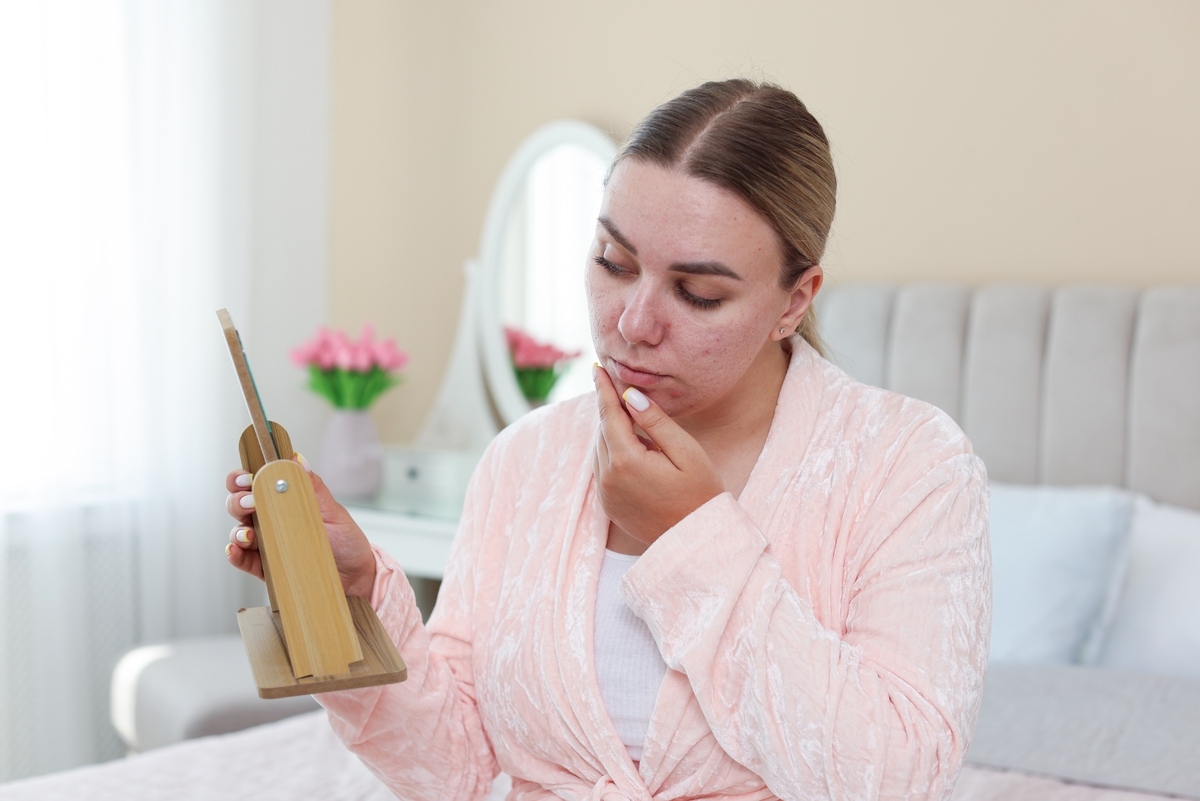
Does Microneedling Actually Work on Acne Scars?
- Skin 101
- September 6, 2026
- 8 min read
Microneedling
Table of Contents
- 1. What "Working" Actually Means for Acne Scars
- 2. Why Microneedling Targets Scars Differently Than Other Treatments
- 3. What the Research Actually Shows
- 4. Which Scar Types Respond Best
- 5. What Affects How Well It Works for You
- 6. What a Realistic Timeline Looks Like
- 7. Frequently Asked Questions
- 8. Bottom Line
If you’ve landed on this page trying to sort fact from marketing, you’ve probably run into the same soft phrasing everywhere: “microneedling can help with acne scars.” That’s not really an answer, it’s a hedge. What you actually want to know is whether microneedling for acne scars produces results you’d notice, or whether it’s more reputation than substance.
What would you like added here, exactly? A follow-up sentence, a new paragraph, or a specific point you want worked in? Happy to draft it once I know what direction to take it.
1. What "Working" Actually Means for Acne Scars
Before getting into results, it helps to define the goal. Microneedling for acne scars isn’t designed to erase scarring completely. It’s designed to reduce depth, soften edges, and improve overall texture so scarring is less visually prominent. That distinction matters, because expecting complete disappearance sets up disappointment even when the treatment is working as intended.
This is also where a lot of the “does it even work” confusion actually comes from. Two people can undergo the exact same treatment plan, one walks away satisfied because they were tracking texture and depth, the other feels let down because they were expecting scars to vanish entirely. The treatment didn’t perform differently between them, their definition of success did. Getting clear on what a realistic outcome looks like before starting is what makes it possible to actually judge whether the treatment worked for you.
2. Why Microneedling Targets Scars Differently Than Other Treatments
Indented acne scars form because the skin loses collagen during the healing process after a breakout. That’s why surface-level treatments, like exfoliating products, don’t do much for them, the problem sits beneath the surface, not on top of it.
Microneedling creates controlled micro-injuries that prompt the body to rebuild collagen in that same area. Over several weeks, that new collagen gradually fills in the indentation from underneath. It’s a slower mechanism than resurfacing treatments, but it addresses the actual structural cause of the scarring rather than just smoothing what’s visible on top.
3. What the Research Actually Shows
This is where things get more concrete than marketing language. According to a clinical study published in the National Journal of Maxillofacial Surgery, patients undergoing microneedling therapy for atrophic acne scars showed a ninety percent reduction in the number and depth of scars after three treatment sessions, based on independent observer assessment.
A separate safety and efficacy study published on PubMed similarly found that microneedling produced a significant reduction in acne scarring while maintaining a strong safety profile, with low rates of complications compared to more aggressive resurfacing options like ablative laser treatment.
These aren’t outlier results. Research on microneedling for acne scars consistently points in the same direction, meaningful improvement, low complication risk, and results that continue to develop over multiple sessions rather than a single visit.
4. Which Scar Types Respond Best
Microneedling for acne scars tends to work best on:
- Rolling scars, since their gradual slopes respond well to gradual collagen rebuilding
- Shallow to moderate boxcar scars
- Overall textural unevenness left behind by past breakouts
Deeper, narrower ice-pick scars tend to respond more slowly and often benefit from being combined with another treatment, since their depth-to-width ratio makes them harder to fill through collagen rebuilding alone.
5. What Affects How Well It Works for You
A few factors influence outcomes beyond the treatment itself:
- Scar depth and age — Newer, shallower scars generally respond faster than long-established, deep scarring
- Consistency — Skipping sessions or spacing them too far apart slows the collagen-building process considerably
- Provider technique — Needle depth needs to be calibrated to the scar being treated, which is part of why in-office treatment outperforms at-home devices
- Combined treatments — Some research, including a scoping review published on PMC, points to microneedling combined with PRP producing more significant collagen deposition than microneedling alone for certain patients
6. What a Realistic Timeline Looks Like
A single session can produce some improvement in overall texture, but meaningful change in scar depth typically requires a series of sessions spaced four to six weeks apart. Most patients begin noticing textural improvement within the first few sessions, with more established scarring continuing to improve gradually over the course of a full treatment plan.
Expecting visible results after one session, and being disappointed when scarring hasn’t disappeared, is one of the most common reasons people mistakenly conclude the treatment “doesn’t work.” The mechanism itself, collagen rebuilding, simply doesn’t operate on a one-visit timeline.
7. Frequently Asked Questions
How many sessions does it take to see results on acne scars?
Most patients need a series of sessions, often four to six or more depending on scar depth and type, spaced several weeks apart to allow collagen to rebuild between treatments.
Does microneedling work on all types of acne scars?
It works best on rolling and shallow boxcar scars. Deeper ice-pick scars often respond more slowly and may need to be paired with another treatment for the best result.
Is the improvement from microneedling permanent?
The collagen your body builds becomes part of your own tissue, so improvement is generally long-lasting, though skin continues to age and change over time like any other skin.
Can microneedling make acne scars worse?
When performed by a trained provider on appropriate candidates, this is uncommon. Risk increases with improper technique or when performed over active, inflamed breakouts.
How does microneedling compare to laser treatments for scars?
Microneedling generally carries a lower risk of pigmentation changes, particularly for deeper skin tones, though laser treatments can sometimes produce faster initial results. The right choice depends on scar type, skin tone, and downtime tolerance.
8. Bottom Line
Does microneedling for acne scars actually work? The research says yes, with meaningful, measurable reductions in scar depth and number documented across multiple clinical studies. But it works within real limits: results build gradually, scar type affects how well it responds, and consistency across a full series of sessions matters more than any single appointment. Going in with realistic expectations, and a provider who assesses your specific scarring first, is what separates people who see real improvement from people who give up after one session.
If you’re trying to figure out whether your specific scarring is a good match, a consultation is the most reliable way to know, since scar type and depth aren’t always obvious without a hands-on assessment. If you’re in the Houston area, you can also read more about microneedling in Houston and what a session actually involves before booking.
Key Takeaways
- Clinical research shows meaningful reductions in acne scar depth and number after a series of microneedling sessions
- Microneedling works by rebuilding collagen beneath the scar, addressing the structural cause rather than just the surface
- Rolling and shallow boxcar scars respond best; deep ice-pick scars often need a combined approach
- Results build gradually across a series of sessions, not after a single visit
- Combining microneedling with PRP may improve outcomes for some patients, per current research
RESULTS AREN'T A MAYBE. THEY'RE A PROCESS.
The research is clear that microneedling works for acne scars, but the outcome you get depends on your specific scarring and following through on a full treatment plan. A consultation can tell you exactly what to expect for your skin, not a general average.
Disclaimer: This content is for informational purposes only and does not constitute medical advice. Individual results vary. Consult a licensed provider before beginning any skin treatment.
References
- Waghmare KB, et al. An objective assessment of microneedling therapy in atrophic facial acne scars. National Journal of Maxillofacial Surgery. https://pmc.ncbi.nlm.nih.gov/articles/PMC9651250/
- Casabona G, et al. Safety and efficacy of microneedling technology in the treatment of acne scars. PubMed. https://pubmed.ncbi.nlm.nih.gov/34596936/
- Microneedling with PRP for Acne Scars: A New Tool in Dermatologist Arsenal. PMC. https://pmc.ncbi.nlm.nih.gov/articles/PMC11174266/