

Microneedling vs. Chemical Peels: Which Is Better for Acne Scars?
- Skin 101
- August 23, 2026
- 10 min read
MICRONEEDLING & CHEMICAL PEEL
Table of Contents
- 1. Why This Comparison Comes Up So Often
- 2. How Microneedling Approaches Acne Scars
- 3. How Chemical Peels Approach Acne Scars
- 4. Quick Comparison: Microneedling vs. Chemical Peels
- 5. Where Each Treatment Falls Short on Its Own
- 6. When Providers Recommend One Over the Other
- 7. Can They Be Combined?
- 8. Frequently Asked Questions
- 9. Bottom Line
If you’ve spent any time looking into acne scar treatments, you’ve probably noticed microneedling vs chemical peels shows up on nearly every list of options. That’s not a coincidence, and it’s not because they do the same thing. They approach scarring from two different directions, and understanding that difference is what actually helps you figure out which one fits your skin, or whether you need both.
Here’s how each treatment works, where each one is strongest, and how providers typically decide between them.
1. Why This Comparison Comes Up So Often
Acne scarring isn’t a single kind of damage. Some of it lives beneath the skin, in the form of lost collagen and indentation. Some of it lives on the surface, in the form of uneven texture, dullness, and lingering discoloration. Microneedling and chemical peels each target one of those layers more directly than the other, which is exactly why they get compared so often and why the “better” answer depends on which part of your scarring bothers you most.
Neither treatment is inherently stronger than the other. They’re built for different jobs. Comparing them head to head only makes sense once you know what each one is actually designed to fix.
2. How Microneedling Approaches Acne Scars
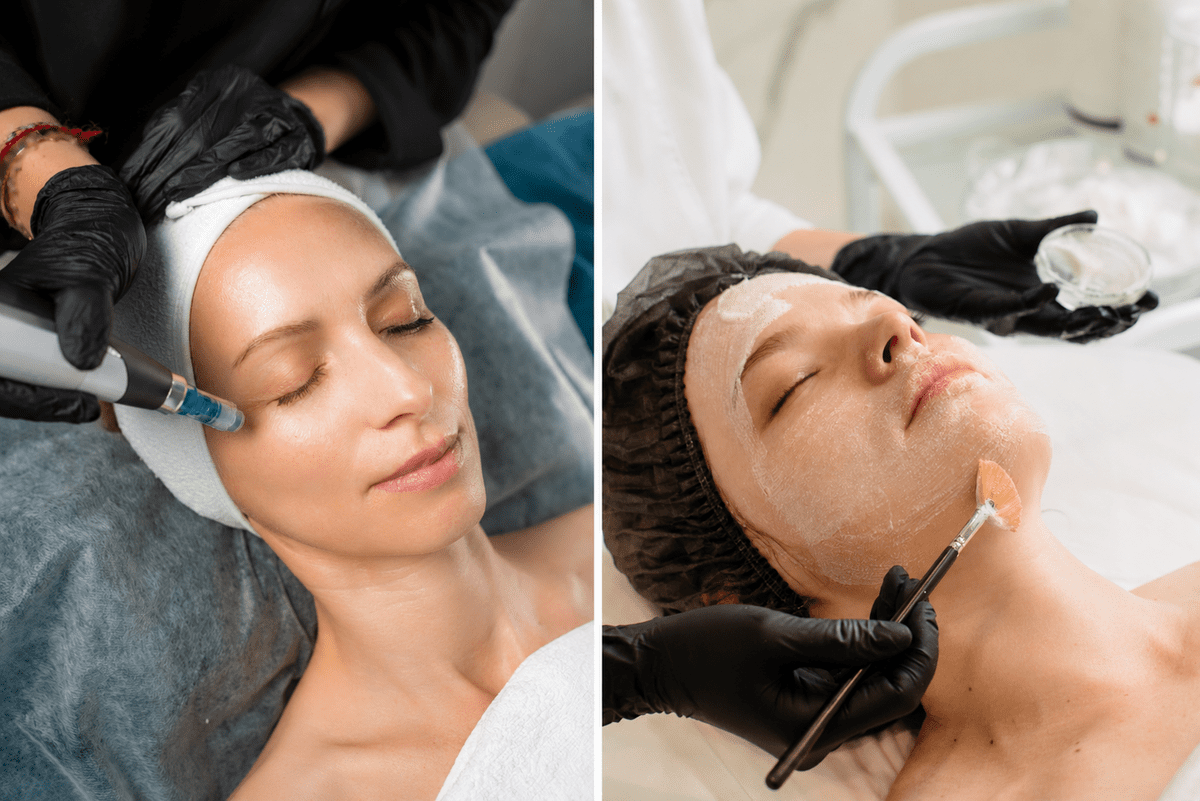
Microneedling works from underneath the skin. Fine, sterile needles create controlled micro-injuries that trigger the body’s natural healing response, prompting new collagen and elastin production in the treated area. For indented acne scars, that’s significant, since the indentation itself is a result of collagen loss during the original healing process. Rebuilding that collagen is what gradually fills the scar in from below.
This approach tends to work best for:
- Rolling and shallow boxcar scars
- General loss of firmness or structure in scarred areas
- Overall texture improvement across a broader area
Results build gradually across a series of sessions rather than appearing after one visit, since collagen remodeling is a weeks-long process each time.
3. How Chemical Peels Approach Acne Scars
Chemical peels work from the surface down. A chemical solution is applied to the skin, causing the outer, damaged layers to lift away and reveal smoother skin underneath.
According to DermNet, this process can also stimulate some new collagen formation, but its primary strength is resurfacing rather than rebuilding structure from beneath.
This approach tends to work best for:
- Post-acne discoloration and surface pigmentation
- Rough or uneven surface texture
- Very shallow scarring that hasn’t created deep indentation
- Overall dullness and tone irregularities
Peels vary significantly in depth and intensity, from gentle surface treatments with minimal downtime to deeper peels that require more recovery, so results and downtime aren’t identical across every type.
4. Quick Comparison: Microneedling vs. Chemical Peels
| Microneedling | Chemical Peels | |
|---|---|---|
| How it works | Fine needles create micro-injuries beneath the surface to rebuild collagen | A chemical solution removes damaged outer layers of skin |
| Best for | Indented, structural scarring (rolling, shallow boxcar) | Surface discoloration, dullness, uneven tone |
| Where it works | Beneath the skin | On the surface layer |
| Typical downtime | 1–2 days of redness | Ranges from none to a week or more, depending on peel depth |
| Results timeline | Gradual, over 4–6 weeks per session | Often visible within days, varies by peel strength |
| Skin tone considerations | Considered safer across a wider range of skin tones | Peel depth and strength should be selected based on skin tone |
| Can be combined? | Yes, often sequenced with peels for a fuller result | Yes, often layered in after microneedling addresses structure |
5. Where Each Treatment Falls Short on Its Own
Microneedling doesn’t do much for surface pigmentation. It’s built to rebuild structure underneath the skin, so if your main concern is discoloration left behind after breakouts rather than indentation, it won’t move the needle much on its own.
Chemical peels don’t rebuild deep structural loss. A peel can smooth the surface and even out tone, but it doesn’t reach the collagen deficit sitting beneath a deep, established scar the way microneedling does. Deeper scars, in particular, tend to respond slowly to peels alone.
This is the core reason the “microneedling vs chemical peels” framing can be misleading. It’s less about which one wins and more about which layer of the problem you’re actually trying to solve.
6. When Providers Recommend One Over the Other
Providers typically weigh a few factors when choosing between the two, or deciding which one to prioritize first:
- Scar depth: deeper, indented scars usually lean toward microneedling as the primary treatment
- Surface concerns: discoloration, dullness, and uneven tone usually lean toward a chemical peel
- Skin tone: according to the American Academy of Dermatology, a consultation is recommended before any peel so a dermatologist can assess how your specific skin tone and history factor into which peel depth and strength is appropriate, since deeper peels carry more risk of pigmentation changes for some skin tones
- Downtime tolerance: peels range from virtually no downtime to a week or more depending on depth, while microneedling recovery is generally more predictable and shorter
- Active acne status: both treatments are typically postponed if breakouts are active and inflamed
7. Can They Be Combined?
Often, yes. Since the two treatments address different layers of the same problem, many providers build treatment plans that use both, sequenced appropriately rather than layered on the same day. Microneedling handles the structural rebuilding, while a chemical peel addresses surface tone and texture, and together they can produce a more complete result than either treatment alone. The exact sequencing and spacing between the two depends on scar type, peel depth, and how your skin responds to the first few sessions.
A typical combination plan doesn’t start with both treatments at once. Providers often begin with whichever treatment addresses the more prominent concern first, then introduce the second treatment once the skin has had time to heal and respond. For someone with both deep indentation and noticeable discoloration, that might mean starting a microneedling series to rebuild structure, then layering in a chemical peel later to refine tone and surface texture once the deeper scarring has started to improve. This staged approach also gives your provider a clearer picture of how your skin responds to each treatment individually, which helps fine-tune the plan as it progresses rather than guessing at the right combination from the start.
8. Frequently Asked Questions
Which treatment works faster, microneedling or chemical peels?
Peels often show visible surface improvement sooner, sometimes within days depending on peel depth, while microneedling results build more gradually over several weeks as collagen remodels. Neither is inherently faster for every type of scarring.
Is one treatment more painful than the other?
Both are generally well tolerated. Microneedling sensation is often described as mild pressure or scratching, especially with topical numbing, while chemical peels can cause a temporary warm or stinging sensation during application, which varies by peel strength.
Can I do microneedling and a chemical peel in the same appointment?
This isn’t typically recommended on the same day, since combining two treatments that both create controlled skin injury increases irritation risk. Providers usually space them out as part of a broader plan.
Which one is better for post-acne dark spots specifically?
Chemical peels are generally more directly suited to surface discoloration, since they work by removing the outer layer where that pigmentation sits.
Do I need a consultation to know which one I need?
Yes. Scar type, skin tone, and skin sensitivity all factor into the recommendation, and a visual and tactile assessment is the most reliable way to determine which approach, or combination, fits your skin.
9. Bottom Line
Microneedling and chemical peels aren’t really competing treatments, they’re solving different parts of the same problem. Microneedling rebuilds what breakouts took away beneath the surface, while chemical peels refine what’s visible on top. For many patients dealing with acne scarring, the most effective plan isn’t picking one over the other, it’s understanding which one addresses your specific scarring first, and whether combining both gets you further than either treatment alone.
If you’re not sure which approach fits your skin, a consultation is the most direct way to find out, since scar depth and surface concerns aren’t always obvious from the mirror alone.
Key Takeaways
- Microneedling rebuilds collagen beneath the skin, making it better suited to deeper, indented scarring
- Chemical peels resurface the top layer, making them better suited to discoloration and surface texture
- Neither treatment fully replaces the other for every type of acne scarring
- Skin tone and peel depth both factor into which peel strength is appropriate for a given patient
- Many providers combine both treatments, sequenced appropriately, rather than relying on just one
- A consultation is the most reliable way to determine which approach fits your specific scarring
YOU DON'T HAVE TO GUESS WHICH TREATMENT IS RIGHT.
Microneedling and chemical peels solve different problems, and most people can’t tell from the mirror which one their skin actually needs. A consultation looks at your scarring, texture, and tone directly and builds a plan around what’s really going on, whether that’s one treatment or both.
Disclaimer: This content is for informational purposes only and does not constitute medical advice. Individual results vary. Consult a licensed provider before beginning any skin treatment.