

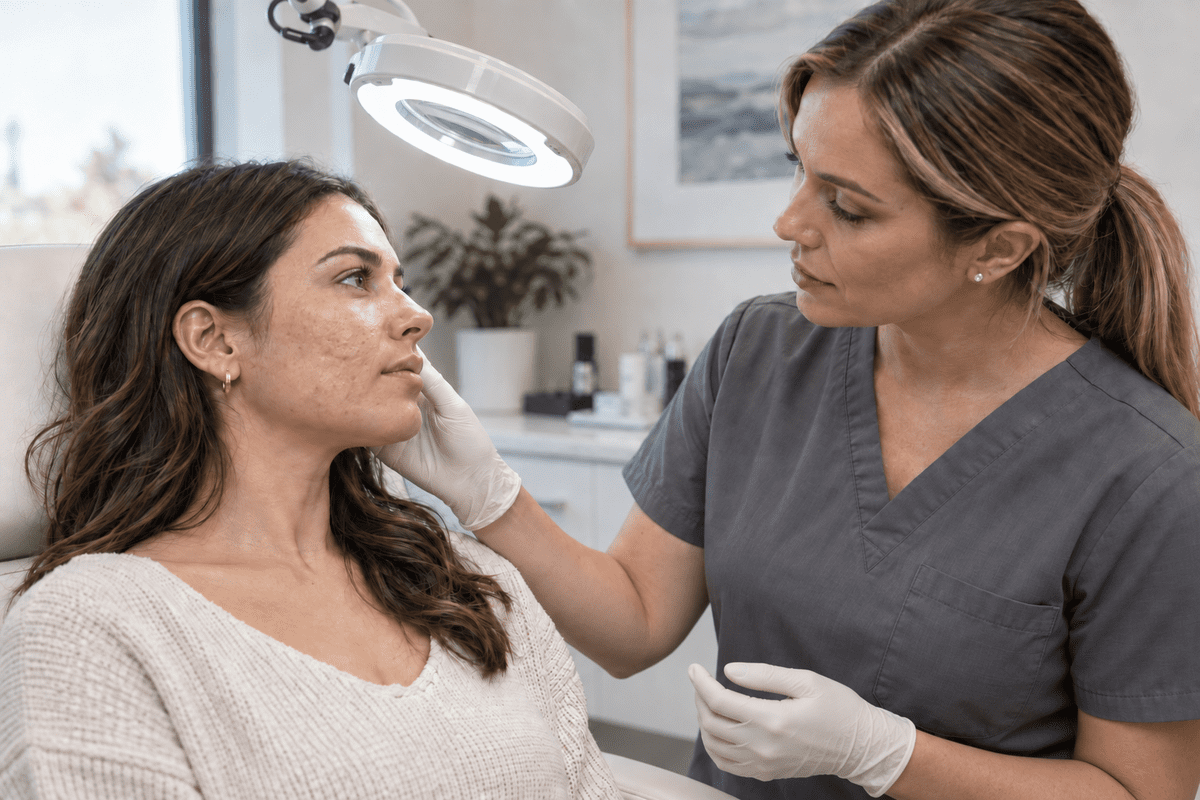
What Should You Consider Before Choosing an Acne Scar Treatment?
- Skin 101
- October 11, 2026
- 9 min read
ACNE SCAR TREATMENT
Table of Contents
Before choosing an acne scar treatment, most people jump straight to researching options, microneedling, peels, lasers, what works best. That’s useful information, but it skips a step that actually matters more: understanding your own priorities first. The “best” treatment isn’t a fixed answer, it depends on factors specific to you, and knowing those factors before you start researching options makes the whole decision easier.
This matters more than it might seem. Two people with visually similar scarring can end up with completely different, equally appropriate treatment plans, simply because their budget, schedule, and skin history differ. Skipping straight to “what treatment is best” without first understanding your own constraints often leads to picking something that sounds impressive but doesn’t actually fit your life.
1. Why This Isn't Just About Picking a Treatment
Scar type isn’t the only variable that matters. According to the American Academy of Dermatology, before creating a treatment plan, a dermatologist typically considers the type of scarring, how many scars are present, age, skin tone, and budget, among other factors. That’s a longer list than most people expect going in, and it’s worth thinking through each piece yourself before a consultation, rather than discovering it all in the room for the first time.
It’s also worth recognizing that these factors interact with each other, not just apply independently. A treatment that’s ideal for your scar type might not be realistic given your budget. A treatment with minimal downtime might not be intense enough for how established your scarring is. Part of choosing well is understanding these tradeoffs exist before you’re standing in front of a provider trying to weigh them for the first time under pressure.
2. How Established Your Scarring Is
Newer, shallower scarring generally responds faster and requires less intensive treatment than long-established, deeper scarring. Treating scarring earlier tends to be more manageable than treating it after years of being left alone, since skin’s ability to produce new collagen changes over time, and older skin typically needs more stimulation to achieve the same improvement.
This isn’t about creating urgency, it’s a genuine factor worth weighing. If your scarring is relatively recent, you may have more flexibility in how aggressively you approach treatment. If it’s been present for years, that’s useful information for a provider to have upfront, not something to downplay.
It’s also worth thinking honestly about how your scarring has changed over time, not just how it looks right now. Has it become more or less noticeable? Has your skin’s overall texture shifted around the scarring itself? These observations, even informal ones, give a provider useful context that a single snapshot in time doesn’t capture.
3. Your Downtime Tolerance
Be honest with yourself about how much recovery time you can realistically accommodate. Some treatments involve a day or two of mild redness. Others involve a longer, more visible recovery period. Neither is inherently better, but choosing a treatment that doesn’t fit your actual schedule tends to lead to skipped sessions or rushed healing, both of which slow progress.
This factor alone can meaningfully narrow your options. If you have a wedding, event, or work commitment coming up, that timeline should shape which treatments are realistic right now versus which might be better scheduled for later. Some treatments involve significant downtime, while others involve comparatively minimal recovery, and factoring this in early prevents choosing a treatment that ends up conflicting with your actual life.
It’s also worth thinking about downtime tolerance as something that can change over time. A treatment plan that doesn’t fit your schedule right now might make more sense in a few months. This is a legitimate reason to sequence treatment differently, not a reason to avoid treatment altogether.
4. Your Budget, Realistically
Cost varies significantly between treatment types, and it’s worth thinking through not just the price of a single session, but the total cost of a full treatment plan. Pricing generally depends on the treatment selected, scarring severity, number of sessions required, and provider experience, and more extensive treatment plans naturally increase overall cost.
It’s also worth knowing upfront that acne scar treatment is generally considered cosmetic and isn’t typically covered by insurance, which means thinking through your realistic budget before falling in love with a specific treatment plan is worth doing early rather than late.
A useful exercise here is separating what you’d ideally spend from what you can actually spend without financial strain. Providers can often adjust a treatment plan, spacing sessions further apart, starting with a less intensive option, or prioritizing the areas that bother you most, to fit a real budget rather than an aspirational one. Being upfront about this constraint tends to produce a more sustainable plan than stretching to afford the most comprehensive option available.
5. Your Skin Tone
Some treatments carry a higher risk of pigmentation changes for deeper skin tones, particularly surface-focused resurfacing treatments. This doesn’t rule anyone out of treatment, but it does affect which options are considered safest and which require a more cautious, conservative approach. Being upfront about this with a provider, rather than assuming every treatment carries equal risk, leads to a plan that’s actually suited to your skin.
According to MedlinePlus, a service of the National Library of Medicine, skin pigmentation varies significantly between individuals, and treatments that affect the skin’s surface layer can carry different risks of pigment changes depending on natural skin tone. This is also a factor worth researching a little on your own, not to second-guess a provider, but to ask informed questions. If a treatment is being recommended that carries meaningful pigmentation risk for your skin tone, it’s reasonable to ask directly what precautions will be taken, or whether an alternative approach might carry less risk while still addressing your scarring effectively.
6. Active Acne Status
If you’re still experiencing active, inflamed breakouts, that typically needs to be addressed before scar treatment begins. Treating scarring while acne is still active risks worsening irritation and interfering with healing. If this applies to you, it’s worth factoring stabilizing your acne into your overall timeline rather than treating it as a separate, unrelated step.
This can also affect how you think about the other factors above. If active acne needs to be addressed first, your realistic timeline naturally extends, which may change how you’re thinking about budget planning or scheduling around downtime. It’s worth building this into your expectations from the start rather than discovering the delay partway through the process.
7. Frequently Asked Questions
Do I need to have all of these factors figured out before my consultation?
No, a good consultation helps you think through them. Having a general sense of your priorities beforehand just makes that conversation more productive.
What if my budget and my ideal treatment don't match up?
That’s common, and it’s worth discussing directly. Providers can often suggest a phased approach or a different combination of treatments that fits your budget more realistically.
Does age affect which treatment is recommended?
It can. Skin’s ability to produce new collagen changes with age, which may affect how many sessions are needed or which approach is most effective.
Should I wait until I have more time for downtime before starting treatment?
Not necessarily. Many effective options involve minimal downtime, so it’s worth discussing your schedule with a provider rather than assuming treatment has to wait.
How do I know if my scarring is severe enough to need a more intensive treatment?
This is genuinely hard to judge on your own, since scar depth isn’t always obvious from the mirror. A hands-on assessment is the most reliable way to know.
Is it normal to feel overwhelmed by all these factors?
Yes, and that’s exactly why a consultation exists, to help sort through these considerations with someone who does this regularly, rather than trying to weigh everything alone.
8. Bottom Line
Choosing an acne scar treatment isn’t just about researching which procedure sounds most effective. Scarring severity, downtime tolerance, budget, skin tone, and active acne status all shape which treatment, or combination of treatments, actually makes sense for you. Thinking through these factors before your consultation doesn’t replace professional guidance, but it does mean you walk in already knowing what matters most to your situation, and that tends to produce a plan you can actually stick with rather than one that sounds good on paper but doesn’t fit your real life.
Once you’ve thought through these factors, our guide to acne scar treatment options breaks down what’s actually available, and our list of acne scar treatment questions can help you turn your priorities into a productive consultation. For lower-commitment starting points while you’re still deciding, our facial treatments can support overall skin health in the meantime. If you’re in the Houston area, our Houston acne scar treatment page covers what a consultation and treatment plan actually look like locally.
Key Takeaways
- Scarring severity, downtime tolerance, budget, skin tone, and active acne status all shape the right treatment for you
- Older, more established scarring often requires more intensive treatment than newer scarring
- Acne scar treatment is generally not covered by insurance, making budget planning worth doing early
- Skin tone affects which treatments carry more or less risk of pigmentation changes
- Active breakouts are typically addressed before scar treatment begins
- These factors interact with each other, so it’s worth thinking through tradeoffs before your consultation, not just during it
THE RIGHT ANSWER DEPENDS ON YOU, NOT A TRENDING TREATMENT.
Budget, downtime, skin tone, scarring severity, they all shape what actually works. A consultation takes those factors seriously and builds a plan around your specific situation, not a one-size-fits-all recommendation.
References
Disclaimer: This content is for informational purposes only and does not constitute medical advice. Individual results vary. Consult a licensed provider before beginning any skin treatment.